Birth of An Urban Nature Enthusiast

Pardon the rather overwrought title, but it’s true; an elementary school “Nature Collection” assignment changed my life.

It was also, at the age of 7, my first bitter taste of academic failure.

On the face of it, it was a rather fun assignment — go out into nature and make a collection of pods, seed and leaves from a variety of trees.

leaf-collection-white

The one tiny problem was the complete lack of such trees anywhere near where I lived.

Most of my fellow pupils at Saint Andrew’s school, located in the middle of an English industrial city (Newcastle upon Tyne), probably shared my problem. Some of them may have lived within reach of Exhibition Park or the Town Moor, but I lived down on the Quayside. We had the Tyne river, docks, ancient buildings — but no sycamores, oaks or hazel trees for miles.

The Quayside in more recent years (2010). Our family's flat used to be the area circled in red to the left of the photo.

The Quayside in more recent years (2010). Our family’s flat used to be the area circled in red to the left of the photo. I was much more acquainted with the exact girder pattern of the Tyne Bridge just above my bedroom window than I was with the mysteries of trees.

Now, don’t misunderstand me, I loved growing up down there. In spite of the complete lack of any family-oriented facilities (including trees), it was a truly epic place for childhood adventure.

High Level Bridge

The High Level Bridge viewed from a part of the old walls where we liked to play. There are a few small trees growing there now, but it was mostly just weeds back in the 50’s and 60’s.

There were a handful of kids in the neighbourhood — my little brother and I, the two sons of the pub owner, and the two daughters of another bank caretaker.

We were “free range” and felt we owned the city.

The ancient city walls were our forts and houses, and many games were staged in the abandoned graveyard of All Saints Church.

All Saint's Church, Newcastle upon Tyne

All Saints Church had no congregation so it was left to turn into an overgrown adventure playground. Because the church itself was a protected historic building it was never demolished.

It didn’t occur to me for a moment that we were nature-deprived. There were, after all, plentiful weeds on the old World War II bomb-sites with which to create spectacular bouquets.

One of my favourite childhood bouquet ingredients. It’s called fireweed here in Canada, but in the UK it has the more poetic name “Rosebay WIllowherb.”

But the dreaded Nature Collection project was real eye opener. I’d never actually seen the sycamore trees it spoke of, with their clever little helicopter seedpods. I certainly had idea where to go and collect samples. My mum, who didn’t drive and had my little brother to look after, couldn’t really help, other that getting some books out of the library for me.

In the end I just handed in some pictures of the items we were supposed to collect. It felt like a massive failure.

sycamore seed pods

Looking back, I feel some lingering annoyance that we were set an assignment so bound to fail. It was a classic curriculum vs real life mismatch.

On the other hand, it was a great gift. I feel as if I’ve been diligently working on that darn assignment ever since.

When I moved to other, greener parts of the world, I pressed all kinds of leaves and flowers in books. Sometimes I composed pictures of with the dried results and sent them to my mum back in Newcastle. I recently came across a few ancient specimens in my massive copy of Wild Flowers of the Pacific Northwest.

Pressed flowers

I still feel a thrill, fifty plus years later, every time I come across any new or particularly beautiful little specimen of leaf, seed, fungus, nest or moss.

Or crow, come to that. We only saw pigeons and gulls down on the Quayside.

Vera the crow

I’m always especially thrilled to see the ways in which nature and the city intersect

I love to see a weed forcing it’s way through asphalt, or human rubbish selected by birds to furnish their nests.

Bushtit nest

I found this fallen and abandoned bushtit nest and “collected” it earlier this year.

Bushtit nest

Detail of the bushtit nest. Construction materials include moss, spider webs (for strength and stretch), leaves, grass and fragments of man-made fibres.

This crow’s nest I found on the ground recently is a great town bird/country bird collaboration – an ingenious mix of twigs, moss, twine, packing fluff and zap straps.
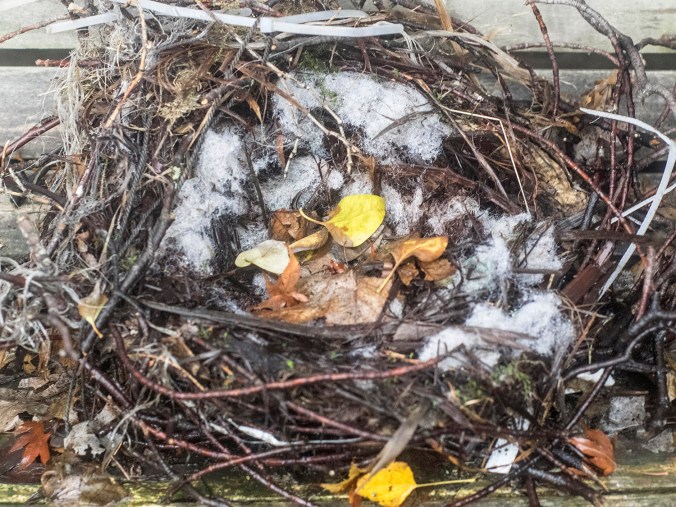
Crow's Nest

Crow's nest detail

So, every piece of moss or rust, every bird I see; every lovely fallen leaf that catches my eye; it’s all being mentally added to the ongoing “Nature Collection” project.
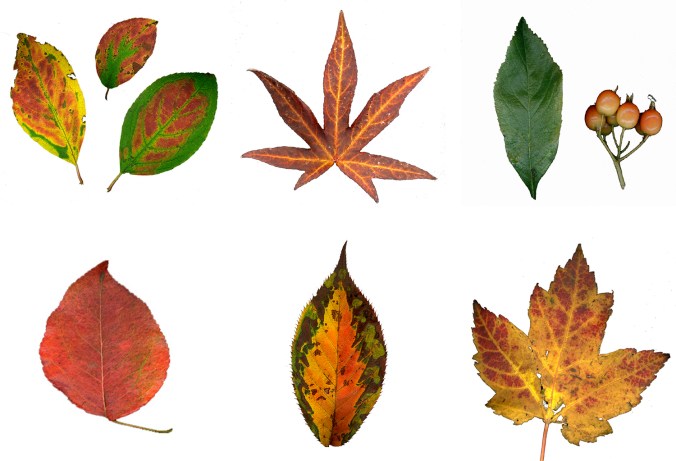
leaf-collection-2

www.junehunter.com


Hug a Crow This Earth Day

Not literally, of course. Crow hugging is fraught with peril at the best of times, but especially in spring when nesting season has them a bit tense.

Baby Face Crow © June Hunter Images

Please, do not hug me.

But I do suggest that you give the crow (or pick your favourite bird, plant, patch of moss or mollusk) a special thought today.

OLYMPUS DIGITAL CAMERA

coral bark maple © June Hunter Images

mussels at Botanical Beach © June Hunter Images 2016

It’s Earth Day so, ideally, we should be extending our love to the entire planet.

But that’s a hard thing to do, particularly when what the planet needs from us right now is massive change —change that is going to be really tough for us to make.

John Marzluff quote2

The majority of the world’s population now lives in cities, where we often feel very cut off from what we think of as Nature.

Lyanda quote

So, given that most of us are urbanites these days, how are we to develop the necessary connection with nature in order to care enough to make change and move towards saving the planet?

As my dear mother used to say, “wherever you go, there you are.”

And where you are now, even if it’s in the heart of the city, has tenacious bits of nature thriving in it.

It just takes a slight focus shift to start becoming aware of, and amazed by it.

OLYMPUS DIGITAL CAMERA

This crow is tending a nest at Hornby and Robson in the heart of downtown Vancouver, right by the Art Gallery. A friend who works at the gallery told me that it’s probably the same pair who nested there last year and caused a traffic kerfuffle when one of their babies flew into the back of someone’s convertible just outside of Café Artigiano.

OLYMPUS DIGITAL CAMERA

Collecting nest furnishings in the heart of downtown Vancouver.

Often the thing you tend to notice first, just because of its size and boldness, is a crow.

CameliaCrow ©June Hunter Images 2016

I find that the crow is your gateway bird, leading to the habit of noticing the bird world as a whole. Once you’ve started to look up to see what the crows are up to, you can’t help but start to notice the robins, sparrows, bushtits, chickadees and hawks going about their more subtle, but equally fascinating, avian business.

Bushtit in the Rain © June Hunter Images 2016

Coopers Hawk on William © June Hunter Images 2016

Chickadee in the Snowbell Tree © June Hunter Images 2016

And noticing birds is, in turn, a gateway to the wonder of nature in general.

Colin Tudge quote

The task of saving the earth often seems far too big and therefore hopeless.

The tools we need this Earth Day are empathy and hope.

Someone who embodies both of these qualities is 87 year old Jean Vanier, who created L’Arche — a unique and loving community for mentally disable adults. Here are some of his thoughts on birds, as told to columnist and writer, Ian Brown in a Globe and Mail interview.

Jean Vanier quote

Eric and Erica on Roof

Hmmm, something to think about …

logo with crow


Some notes on the author’s quoted in this blog post:

John Marzluff’s Wikipedia page says this:
“John Marzluff is a professor of wildlife science at the University of Washington and author of In the Company of Crows and Ravens, Gifts of the Crow, and Welcome to Subirdia. His lab once banded crows with a Dick Cheney mask.”
— so you know he’d be fun guy to know!
Subirdia is his most recent book about the amazing adaptability of birds, their importance, and what we can do to help them survive in our urbanized world.

I first discovered Seattle author Lyanda Lynn Haupt when I picked up a copy of Crow Planet several years ago. It remains one of my favourite books, combining science, poetry and humour  in a way that I could read all day. She’s also written a wonderful book on city wildlife in general (The Urban Bestiary) and I look forward to her next one on the subject of starlings. And she has a blog: The Tangled Nest.

Colin Tudge is a British biologist and entertaining author, The Bird is only one of many books he’s written. I next want to read his book The Secret Life of Trees.

You can read more about the life and work of  Jean Vanier on his website.

Ian Brown is an author and  columnist for the Globe and Mail newspaper. His books include Boy in the Moon, about his severely disabled son and his latest, Sixty, The Beginning of the End, or the End of the Beginning?  That one’s also on my reading list.


The Colour of Crows

Crows and ravens are generally (and understandably) described as birds with black plumage. It is their darkness that allows them to grace the sky with such striking calligraphy.

Formal sentences composed on wires; more fluid, improvisational characters when taking to the air.

crow dance

But it’s so much more complicated, and beautiful, than that.

Feather collage

Crow and raven feathers are highly iridescent. They collect and reflect the light and the colour of the world around them. Gunmetal storm clouds, cornflower blue summer skies, the fire of the rising or setting sun — all paint their feathers with fleeting shades of indigo, lavender, copper and gold.

Copper Dawn Crow

Dawn crow, gilded

George with Luminous Feathers

George, with his eye on the sky … and the sky reflected in his feathers

Vera Reflecting garden

Crow takes flight from birdbath

These reflected shades are often featured in my photography and jewellery, so I think of, and marvel at, corvid hues often.

Raven pendant

Raven pendant

Sometimes I wonder, idly, about how many colours you could actually find in a crow or a raven’s feathers.

Imagine my surprise when a computer glitch answered my question.

I recently downloaded a batch of photos taken of a crow (Vera) in my garden. I use software called Bridge to organize my images. It allows me to see the images from my camera in thumbnail size, like an old fashioned contact sheet. It’s handy to see at a glance what’s there and do a quick edit.

Bridge capture2

I was amazed to see that some of the Vera images had been randomly translated by Bridge into, part normal photo, and part digital sampling of the colours in the photo.

Crow Colour Abstract

Vera’s plumage of many colours

At a glance, I see lavender, lilac, violet, mauve, periwinkle, indigo, charcoal, forest green, sand, pearl, slate — hardly any black, in fact.

It was an ephemeral glitch, but I managed to “capture” a couple of versions.

Crow Colours abstract

Quasi-scientific proof that a crow is not just a black bird.

Young crow in the sun

logo with crow

www.junehunter.com