Dishevelled Crows

My mother had a storehouse of wonderful sayings — one for every occasion, really.

If I was looking particularly unkempt (a look I actively cultivated in my hippy days, but that’s an entirely different story) she’d say I looked as if I’d been “dragged through a hedge backwards.”

Sometimes, at the end of a particularly hard day of cleaning and chores, she’d describe feeling like “the wreck of the Hesperus.”

I’m reminded of both sayings every time I go outside at this time of year and see the state of the local crows.

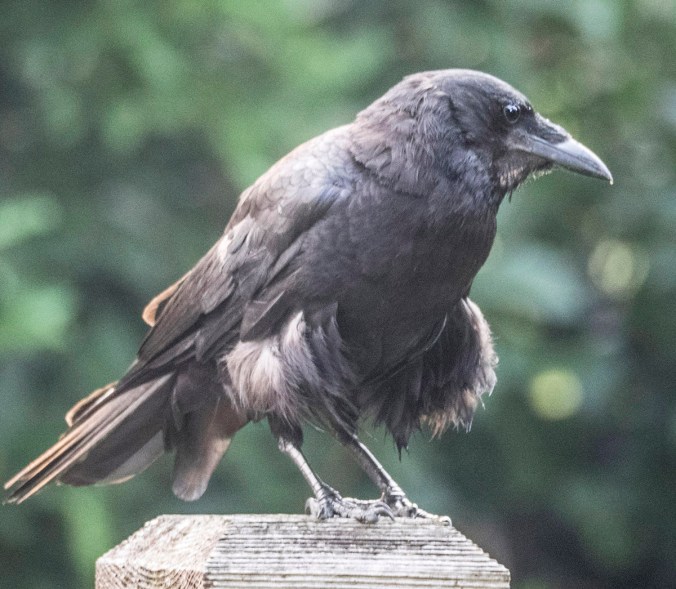
They always look bedraggled at this stage of the molting season, but the seemingly endless, long, hot summer seems to be making them even more tattered and grumpy-looking than usual.

Feathers do not last forever, and after a year of hard service, the crows’ feathers begin to lose their glossy blue-black patina and become dull, with muted shades of sepia and grey. Luckily they have the ability to grow a new set of spanking new ones, but this metamorphosis comes at a cost. The process takes a lot of energy, which is why it’s usually timed for a period of relatively low corvid activity — after nesting and before migration (for those who head to warmer climes for winter). They need rest and good nutrition to grow the new feather cloak and hormonal changes associated with the process can make them feel out of sorts.

This summer, with no rain to speak of in months, it must be especially gruelling. Food sources, and even water, are harder to come by than usual. I’ve been putting out a couple of bowls of water in my neighbourhood for Eric and Clara and the harried parents of the Firehall Triplets. I feel especially sorry for the molting crows with young ones, as they have to find food for extra mouths — and deal with the loud and  constant appeals for food.

The Firehall Family

Although they continue to try their luck at getting the parents to feed them, the fledglings are, by now, capable of doing some of their own foraging. The photo above was taken just this morning. The parent crow ignored that gaping pink beak and flew off with most of the peanuts I’d left. There were a couple left in the grass, and junior eventually got the hint and picked them up himself.

Baby crow figuring out if the leaves of my neighbour’s squash plants are “food.”

Warning: This is a risky vantage point from which to take a photo of a baby (or any) crow.

Eric and Clara

This is Eric, described by my husband as “the James Bond of crows” for his usually sleek unruffled feathers, and manner.

As you can see, even Eric the Suave is looking rather ragged and disgruntled these days.

Eric and Clara this morning. Only 8am and it’s hot already!

Mabel

Mabel can be found every morning just down the alley from Eric and Clara. Here she is, her faded feathers looking almost as colourful as the towels on the washing line behind her.

Painted Crow

My new pal has conveniently marked him- or herself with some paint around the neck, aiding in instant identification. It’s already fainter now and I guess the little paint mishap will be a distant memory when the new feathers come in.


So, when you slip on your new back-to-school or back-to-work outfit, spare a thought for the poor crows who have to grow their own.

It’s an arduous process, and I’m sure they’ll be mightily proud and relieved when their fall wardrobe finally comes in.

www.junehunter.com


Crow calendars now available online, or at the studio sale.

Where’s George?

We spent our Earth Day morning mounting a small neighbourhood search for George.

From late summer to spring, George and Mabel come by our garden several times a day without fail.

Then, one day each spring, they just seem to disappear. They don’t come to the house.  They don’t greet me on my dog walks. I’ve noticed this happen for a couple of years and I assume that they are off doing top secret nesting work somewhere.

But, still, I worry.

A fellow George-watcher in the neighbourhood contacted me on Instagram yesterday to see if I’d seen him lately.  She mentioned that she’d seen Mabel and their baby from last year at her end of the block. It worried me a bit that Mabel was around, but not George.

Since the two are usually pretty inseparable, that seemed strange.

This morning, my neighbour contacted me with the news that she’d seen George — several blocks away from where he usually hangs out. She included a silhouette photo of him on a lamp stand with the distinctive broken beak profile.

This morning’s dog walk naturally took us on an exploratory expedition to this distant intersection in search of George. It seemed a little odd that he’d be so far away, but how many broken-beaked crows could there be in one neighbourhood?

Geordie and Nina, fellow George seekers.

As soon as we got to the corner in question, there he was. But wait a minute.

This crow had a broken beak, just like George, but showed no sign of recognizing us. George usually zooms low all down the street to make a dramatic landing right beside me. This crow just continued his diligent turf-turning project on someone’s lawn (looking for chafer beetle grubs.) No interest in us whatsoever.

Although he looked pretty identical to George, I knew it couldn’t be him. It made me realize two things.

One:  this sort of beak injury can’t be that rare after all.

Two: crows look pretty identical to our undiscriminating human eyes. We have to use all the clues available to us — behaviour, location, which other crows they’re hanging out with, as well as little physical differences, to figure out who’s who. I figure it’s good exercise for the aging brain. Corvid Sudoko.

I gave our new acquaintance a few peanuts, wished him well, and headed back to our street.

George Lookalike

As we got to the area where George and family usually gather, I saw what looked like George Junior. No sign of dad anywhere. Sigh.

Then, like Batman dramatically arriving at a crime in progress, all of a sudden there he was! I think it was only because I was approaching his still-dependant offspring that he broke his cover to come and greet us.

Peanuts were served. Virtual champagne was quaffed.

George!

So, now I’m back to my original theory, which is that George is occupied on some high security nest-related project and won’t be visiting, or swooping down regularly until that job is completed.

Leaving me more time for my other worry project, Eric and Clara.

Their nest is at the other end of the block, high up in the poplars. My concerns for them are, first: the poplar leaves are taking so long to come out that the nest is very visible to predators. It’s too high up for racoons, but just the right height for eagles, hawks and ravens.

Eric and Clara’s nest is about 50 feet up there. The leaves are slowly, slowly providing camouflage.

Which brings to me to my second and latest worry.  If the babies do hatch successfully, how are they going to get to the ground safely. Baby crows often leave the nest before they can really fly. They hop around, do a bit of clumsy gliding, but real flying skill usually takes a couple of weeks to develop. So, what happens when you’re born in a high rise??

Once you start getting attached to wild birds, there really is no end to the list of things to worry about!

I’ll keep you posted.

STUDIO SALE COMING UP

I’ll be having my annual pre-Mother’s Day studio sale in a couple of weeks. If you’re in the Vancouver area, come on by and you can find out the latest news first hand.

Birth of An Urban Nature Enthusiast

Pardon the rather overwrought title, but it’s true; an elementary school “Nature Collection” assignment changed my life.

It was also, at the age of 7, my first bitter taste of academic failure.

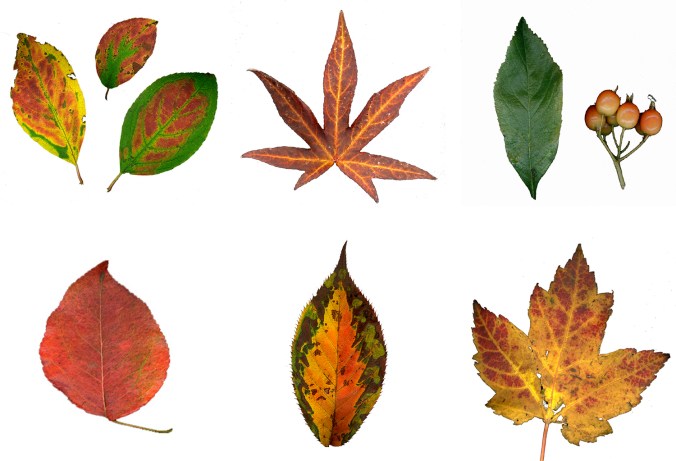
On the face of it, it was a rather fun assignment — go out into nature and make a collection of pods, seed and leaves from a variety of trees.

leaf-collection-white

The one tiny problem was the complete lack of such trees anywhere near where I lived.

Most of my fellow pupils at Saint Andrew’s school, located in the middle of an English industrial city (Newcastle upon Tyne), probably shared my problem. Some of them may have lived within reach of Exhibition Park or the Town Moor, but I lived down on the Quayside. We had the Tyne river, docks, ancient buildings — but no sycamores, oaks or hazel trees for miles.

The Quayside in more recent years (2010). Our family's flat used to be the area circled in red to the left of the photo.

The Quayside in more recent years (2010). Our family’s flat used to be the area circled in red to the left of the photo. I was much more acquainted with the exact girder pattern of the Tyne Bridge just above my bedroom window than I was with the mysteries of trees.

Now, don’t misunderstand me, I loved growing up down there. In spite of the complete lack of any family-oriented facilities (including trees), it was a truly epic place for childhood adventure.

High Level Bridge

The High Level Bridge viewed from a part of the old walls where we liked to play. There are a few small trees growing there now, but it was mostly just weeds back in the 50’s and 60’s.

There were a handful of kids in the neighbourhood — my little brother and I, the two sons of the pub owner, and the two daughters of another bank caretaker.

We were “free range” and felt we owned the city.

The ancient city walls were our forts and houses, and many games were staged in the abandoned graveyard of All Saints Church.

All Saint's Church, Newcastle upon Tyne

All Saints Church had no congregation so it was left to turn into an overgrown adventure playground. Because the church itself was a protected historic building it was never demolished.

It didn’t occur to me for a moment that we were nature-deprived. There were, after all, plentiful weeds on the old World War II bomb-sites with which to create spectacular bouquets.

One of my favourite childhood bouquet ingredients. It’s called fireweed here in Canada, but in the UK it has the more poetic name “Rosebay WIllowherb.”

But the dreaded Nature Collection project was real eye opener. I’d never actually seen the sycamore trees it spoke of, with their clever little helicopter seedpods. I certainly had idea where to go and collect samples. My mum, who didn’t drive and had my little brother to look after, couldn’t really help, other that getting some books out of the library for me.

In the end I just handed in some pictures of the items we were supposed to collect. It felt like a massive failure.

sycamore seed pods

Looking back, I feel some lingering annoyance that we were set an assignment so bound to fail. It was a classic curriculum vs real life mismatch.

On the other hand, it was a great gift. I feel as if I’ve been diligently working on that darn assignment ever since.

When I moved to other, greener parts of the world, I pressed all kinds of leaves and flowers in books. Sometimes I composed pictures of with the dried results and sent them to my mum back in Newcastle. I recently came across a few ancient specimens in my massive copy of Wild Flowers of the Pacific Northwest.

Pressed flowers

I still feel a thrill, fifty plus years later, every time I come across any new or particularly beautiful little specimen of leaf, seed, fungus, nest or moss.

Or crow, come to that. We only saw pigeons and gulls down on the Quayside.

Vera the crow

I’m always especially thrilled to see the ways in which nature and the city intersect

I love to see a weed forcing it’s way through asphalt, or human rubbish selected by birds to furnish their nests.

Bushtit nest

I found this fallen and abandoned bushtit nest and “collected” it earlier this year.

Bushtit nest

Detail of the bushtit nest. Construction materials include moss, spider webs (for strength and stretch), leaves, grass and fragments of man-made fibres.

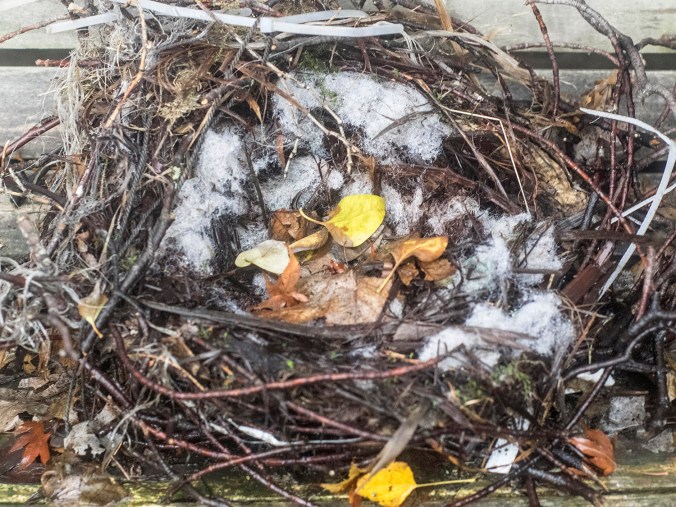
This crow’s nest I found on the ground recently is a great town bird/country bird collaboration – an ingenious mix of twigs, moss, twine, packing fluff and zap straps.

Crow's Nest

Crow's nest detail

So, every piece of moss or rust, every bird I see; every lovely fallen leaf that catches my eye; it’s all being mentally added to the ongoing “Nature Collection” project.

leaf-collection-2

www.junehunter.com